Description
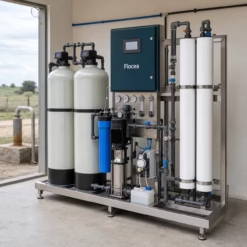
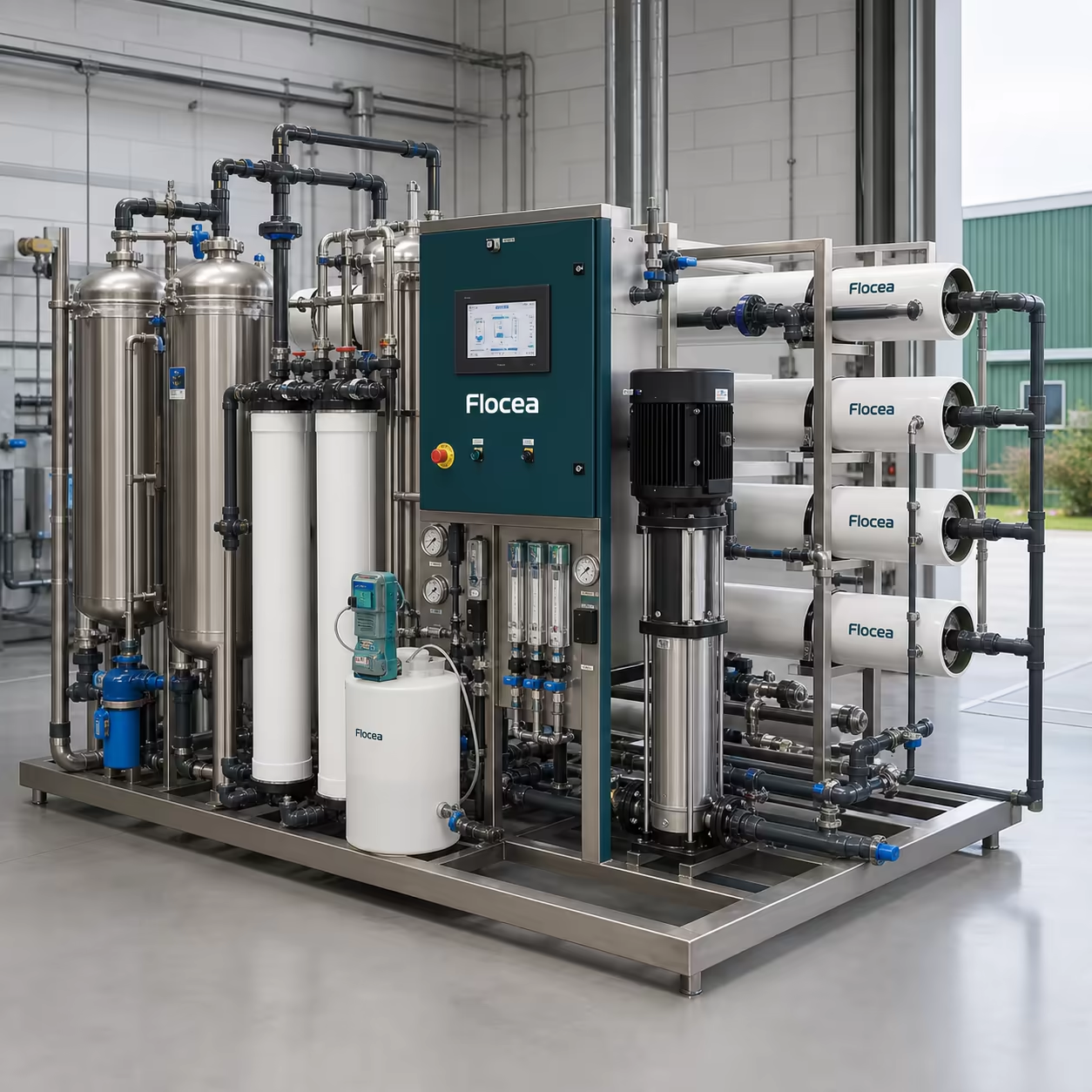
A 2,000 litre-per-hour BWRO plant for treating brackish water on the scale of a farm, a workshop, a community site or a process line. It brings pre-treatment, membranes, instrumentation and controls together in a configuration sized from the water analysis.
What projects is it for?
- Farm and irrigation
- Industrial or food-processing line
- Community or off-grid site with a saline borehole
At this flow rate, plant availability and running costs become the priority. Flocea looks at the recovery rate, storage, pump redundancy, clean-in-place, consumables and concentrate disposal.

A complete study, not just a membrane
Specification of the proposed configuration
| Nominal output | 2,000 litres per hour, i.e. up to 48 m³/day over 24 hours |
|---|---|
| Raw water | Brackish water, borehole or saline aquifer |
| Technology | Industrial BWRO on a skid |
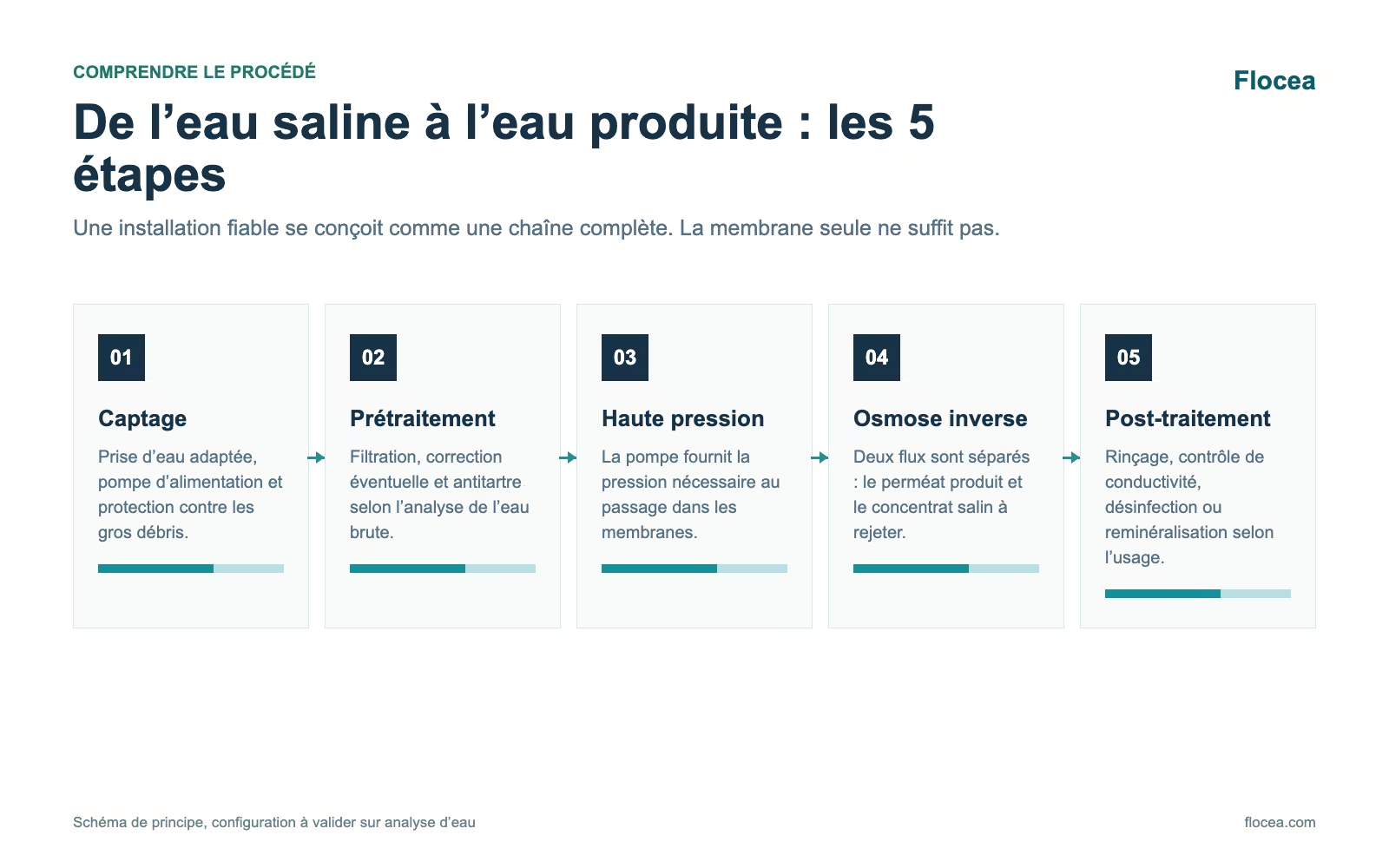
| Pre-treatment | Train to be defined from the analysis and the variability of the resource |
| Control system | PLC, safety functions, monitoring of pressure, flow and conductivity |
| Cleaning | CIP loop and operating protocol to be provided |
| Energy | Supply and power confirmed once the pumps have been selected |
| Options | Container, UV, storage, distribution and remote supervision |
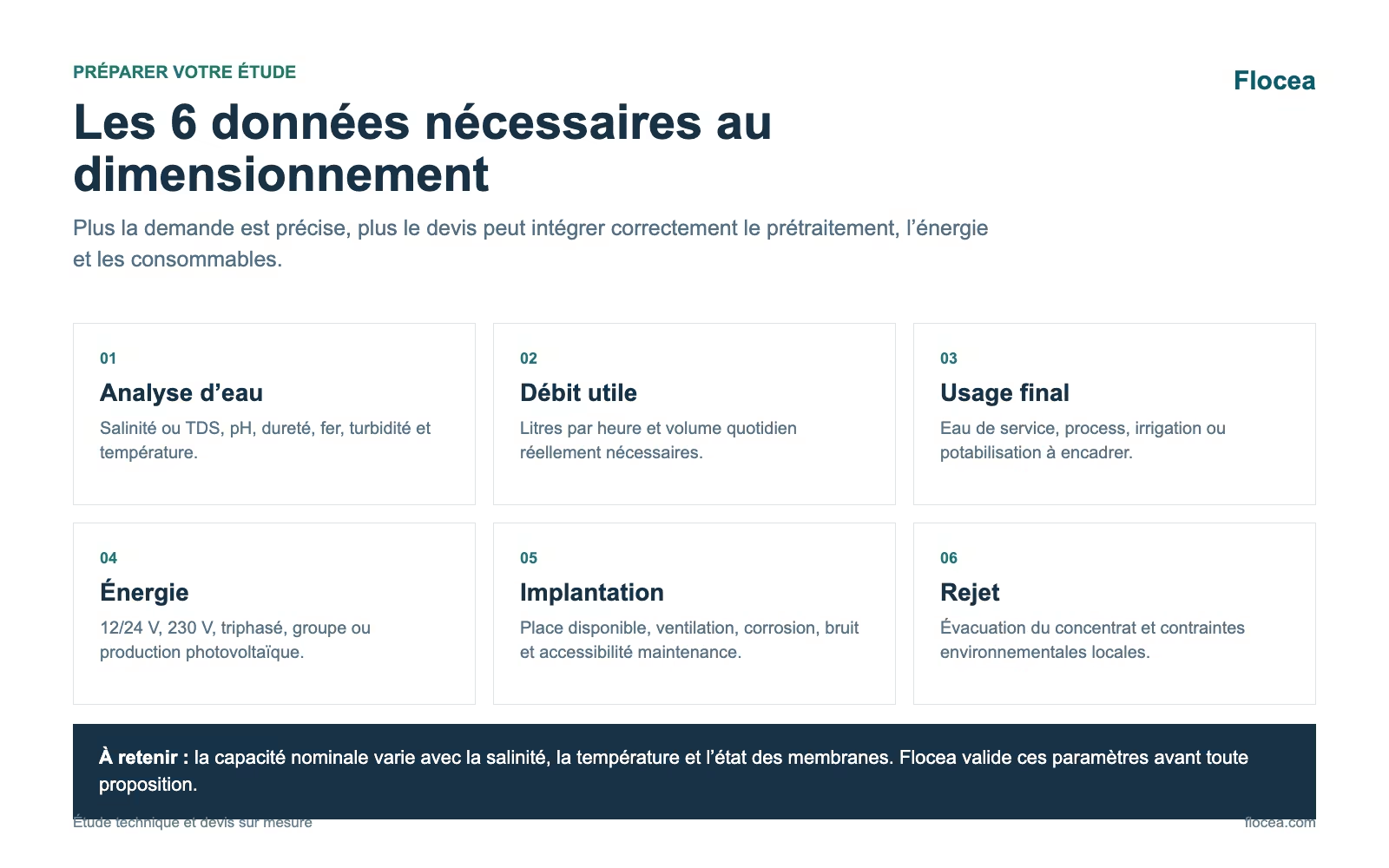
Important: these figures set the framework for the study. The final bill of materials, power draw, recovery rate, permeate quality and dimensions are confirmed at quotation, once the raw water and the site have been validated.

Operation and consumables
The maintenance plan should be set out contractually alongside the water quality and the service hours. Cartridge and chemical consumption is calculated from the analyses, while membrane cleaning is triggered by drift in pressure, flow or salt passage.
- pre-filter cartridges, replaced according to turbidity and running hours;
- antiscalant or conditioning chemicals where the analysis justifies them;
- membrane cleaning and preservation chemicals for extended shutdowns;
- reverse osmosis membranes, whose life depends on pre-treatment and how the unit is run;
- seals, sensors and pump wear parts, per the maintenance schedule.
Compare the Flocea range
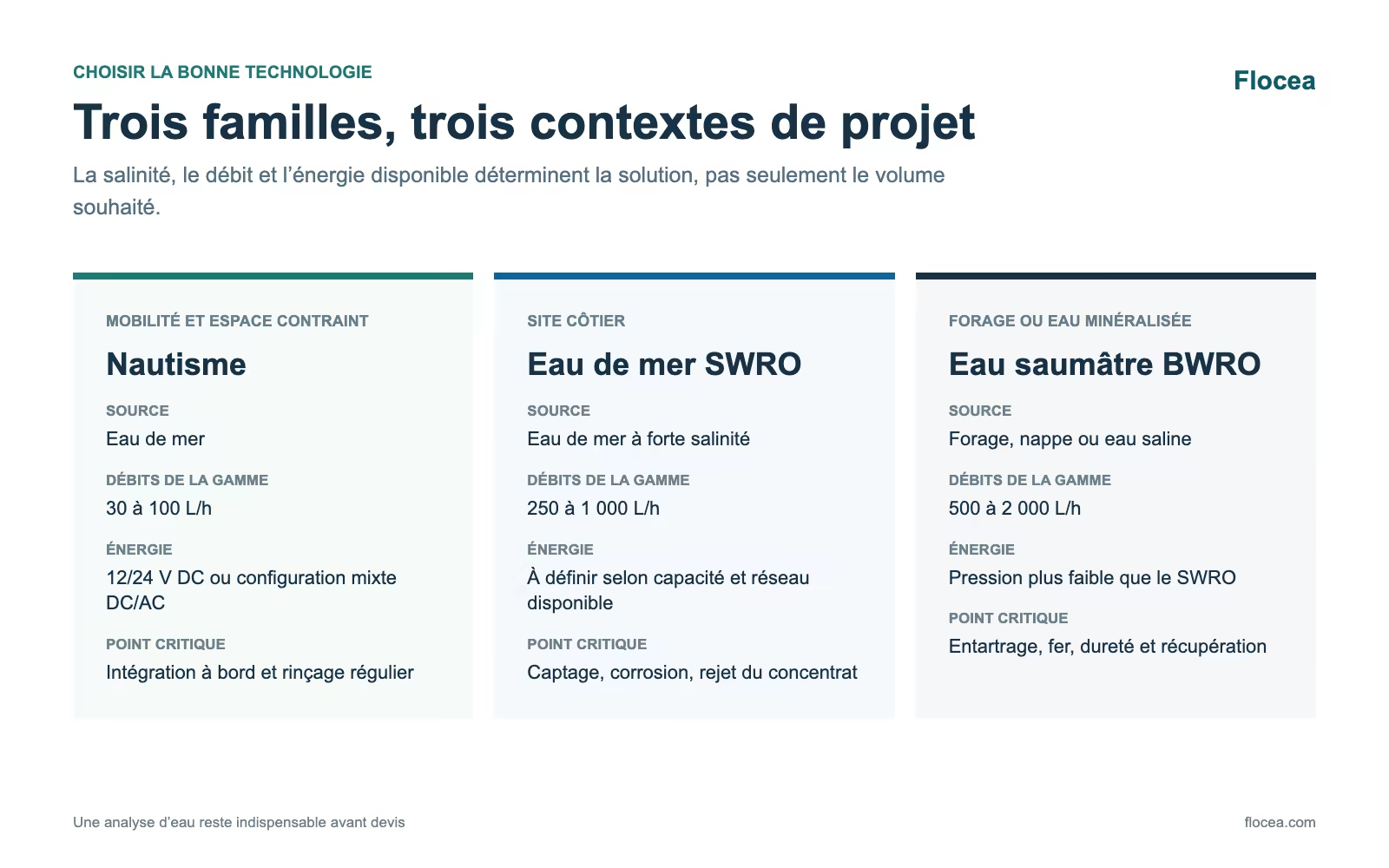
| Solution | Nominal flow | Raw water | Typical project |
|---|---|---|---|
| Marine 30 | 30 L/h | Seawater | Sailing boat and small craft, building autonomy |
| Marine 100 | 100 L/h | Seawater | Large yacht with a full crew |
| SWRO 250 | 250 L/h | Seawater | Coastal villa, guest accommodation, small camp |
| SWRO 1000 | 1,000 L/h | Seawater | Hotel, farm, construction site, small authority |
| BWRO 500 | 500 L/h | Brackish water | Saline borehole, smallholding, process water |
| BWRO 2000 | 2,000 L/h | Brackish water | Agriculture, industry, community site |

Frequently asked questions
What daily volume can a 2,000 L/h BWRO produce?
The theoretical maximum is 48 m³ over 24 hours at nominal flow. The usable volume allows for shutdowns, flushes, maintenance and real-world conditions.
Can this plant be containerised?
Yes. Containerisation makes transport easier and protects the equipment, but it has to allow for ventilation, maintenance access, possible frost and air treatment.
How should consumables be forecast?
A reliable estimate rests on the raw water flow, turbidity, scaling risk, recovery rate and annual running hours.