
Engine-Driven Water Pumps
Petrol and diesel engine-driven water pumps for clean water, dirty water, irrigation and high flow — with no electrical supply. Flocea helps you match the pump to your flow rate, discharge head, water type and duty: irrigation, pillow tank, site work, emptying, pools or fire-water reserves.
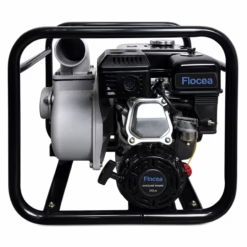
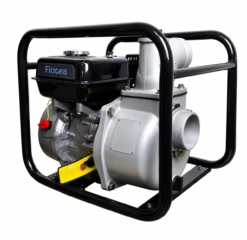
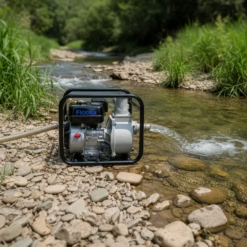
Lire le guide complet
Which engine-driven pump?
An engine-driven water pump moves water without mains power. The right model comes down to four things: the type of water, the flow you need, the total head and how often you will run it.
- Clean water: irrigation, pool filling, transfer from a tank or pillow tank. The most common duty for a compact petrol pump.
- Dirty water: site work, flooding, ditch clearing or water carrying solids. This needs a trash pump rated for particle size, with a matched strainer.
- Fire and standby: fire-water reserves, drawing from a tank, feeding a hose or emergency duty. Here pressure and starting reliability matter more than purchase price.
Petrol, diesel or solar: a straight comparison
| Option | When to choose it | Strengths | Limitations to plan for |
|---|---|---|---|
| Petrol pump | Irrigation, garden, pool, tank, light site work, occasional need for flow. | Lower entry price, quick starting, easy to move. | Fuel, noise, engine servicing, safe petrol storage. |
| Diesel pump | Professional use, large volumes, construction sites, working farms, sustained running. | Torque, endurance, fuel consumption suited to long sessions. | Higher budget, heavier, supplier and after-sales support matter. |
| Solar pump | Regular daytime pumping, remote sites, irrigation with tank storage. | No electricity bill, runs unattended, minimal maintenance. | Output follows sunlight; panels must be sized correctly. |
Technical points to check before buying
- Real flow rate: the quoted figure falls away with head, hose length and friction losses.
- Suction lift: a surface pump will generally draw up to about 7 to 8 metres in good conditions.
- Discharge head: essential if the water must climb to a tank, a sloping field or an irrigation network.
- Connection size: 25, 40, 50 or 80 mm depending on the flow expected and the hose used.
- Water type: clean, lightly loaded and heavily loaded water do not call for the same pump.
- Fire duty: pressure, reliability, couplings, available reserve and the rules applying to the site must all be confirmed.
Common applications
- Agricultural irrigation: draws from a reserve, pond or tank to feed an irrigation line quickly. Suits occasional, mobile or high-flow duties.
- Filling or emptying a pool: moves a large volume without waiting on a low domestic flow. Hose choice largely determines the flow you keep.
- Site work, flooding, dirty water: with mud, sand or small debris, avoid clean-water models and choose a trash pump with a suitable strainer and couplings.
- Fire-water reserve: flow alone is not the question — pressure, run time, couplings, access and reliable starting all need planning.
A system, not just a pump
An engine-driven pump is rarely chosen in isolation. It pairs with a pillow tank, a fire-water reserve, an irrigation scheme or off-grid storage. Tell us the volume to move, the distance, the height and the duty, and we will point you to an engine-driven pump, a solar pump or a combination of both.
Frequently asked questions
Petrol or diesel — which engine?
Petrol suits occasional, mobile and lighter duties. Diesel earns its place on high flows, long sessions, construction sites and professional projects, provided you have a reliable supplier and genuine after-sales support.
Can the pump draw from a pillow tank?
Yes, provided the installation respects suction lift, hose bore, strainer and couplings. We can size the tank, hose and pump together to keep friction losses under control.
Which pump for agricultural irrigation?
Work out the flow needed, the pressure required at the outlet, the distance from reserve to field and the discharge head. A high-flow engine pump may suit — but a solar pump with tank storage is often cheaper to run if the duty is regular.
Can an engine-driven pump be used for firefighting?
It depends on the context. Where the installation must satisfy a regulatory requirement, pressure, couplings, starting reliability and compliance with the rules applying to the site should be confirmed in advance with the authority concerned.