
Surface Pumps
Surface pumps for pillow tanks, wells and irrigation: 3 to 25 m³/h, up to 8 bar and 50 m of head. Self-priming, multistage and automatic models with pressure switch, for clean or lightly loaded water.
-

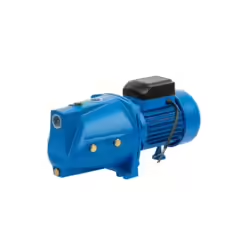
JET self-priming pump 230V 0.75kW / 1 hp
169,00€ HT -
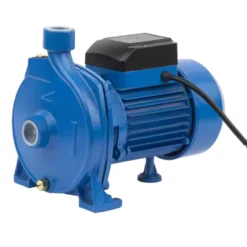
Centrifugal pump 230V 0.75Kw 1 hp 6000 L/h
149,00€ HT -
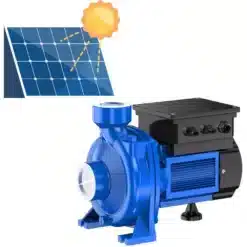
Solar water pump 48 V – 5,000 L/h, 30 m head
349,00€ HT -
JET self-priming pump 230V 0.55kW / 0.8 hp
153,00€ HT -
Centrifugal pump 230V 0.55Kw 0.75 hp 4800 L/h
129,00€ HT -
Solar surface pump set 72 V – 25,000 L/h, 18 m head
Original price was: 491,00€.459,00€Current price is: 459,00€. HT -
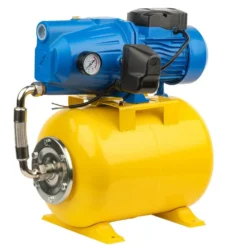
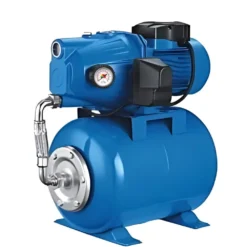
Pompe Surpresseur Eau 750w 1 hp 3600 L/h reservoir 50 litres with Manomètre et Pressostat
289,00€ HT -
Centrifugal pump 230V 0.37Kw 0.5 hp 3600 L/h
99,00€ HT -
High-output solar water pump 96 V – 25,000 L/h
Original price was: 554,00€.499,00€Current price is: 499,00€. HT -
Pompe Surpresseur Eau 750w 1 hp 3600 L/h reservoir 24 litres with Manomètre et Pressostat
279,00€ HT -
Solar centrifugal water pump 48 V – 15,000 L/h
399,00€ HT -
Pompe Surpresseur Eau 550w 0.75 cv 3000 L/h reservoir 24 litres with Manomètre et Pressostat
239,00€ HT
Lire le guide complet
The limit worth knowing before you choose
A surface pump draws water up; it does not push it from below. Suction lift is capped by atmospheric pressure — about 8 metres in practice, and less at altitude or with a long suction run. If the water sits deeper than that, the answer is not a more powerful surface pump but a submersible one.
Beyond that physical limit, what decides real-world performance is total head: static lift, the pressure you want at the outlet, pipe run, bends and bore. A flow figure quoted without those numbers tells you nothing.
Three types, three jobs
- Self-priming centrifugal: will draw even when the suction line is not completely full. The usual choice for wells and pillow tanks.
- Multistage: high pressure with steady flow. Suited to long irrigation runs or several sprinklers at once.
- Automatic: built-in pressure switch starts and stops the pump on demand. Convenient for WC supply or a domestic booster set.
Technical specification
| Characteristic | Value |
|---|---|
| Flow rate | 3 to 25 m³/h depending on model |
| Maximum pressure | Up to 8 bar |
| Power | 0.8 to 2.2 kW |
| Discharge head | Up to 50 m |
| Suction lift | Up to 8 m |
| Liquid temperature | 0 °C to 35 °C |
Typical applications
- Pillow tanks: filling, emptying and transfer between tanks. See the compatible pillow tanks.
- Wells and boreholes: abstraction down to roughly 8 m of water depth.
- Irrigation: feeding sprinklers, drip lines or a reel, sized on the flow and pressure you actually need.
Installation: the four points that prevent a callout
- Site the pump somewhere dry and sheltered, as close to water level as you reasonably can.
- The suction line must be airtight and rise gently towards the pump, with no high point where air can collect.
- Fit a foot valve with strainer at the end of the suction line — without one the pump loses its prime every time it stops.
- Fit union connectors either side of the pump so it can be removed without cutting into the pipework.
Maintenance and fault-finding
- Check joints for tightness and clean the suction strainer periodically.
- Pump will not prime: almost always air entering the suction side. Check seals, unions and that the pump body is filled.
- Pump cycles on and off constantly: check the pressure switch and the pre-charge pressure of the expansion vessel.
- Poor flow: inspect the foot valve, the strainer and the pipe bore before blaming the pump.
Recommended accessories
- Complete suction kit: strainer, foot valve and hose
- Pressure switch for automatic operation
- Inlet filter to protect the pump from debris
- Unions and adaptors to suit the installation