
Installing a pillow tank is not always the whole job: as soon as you add a pump, a booster set, filtration or automatic watering, electricity becomes the sensitive point. Before buying equipment, it pays to look at the consumer unit.
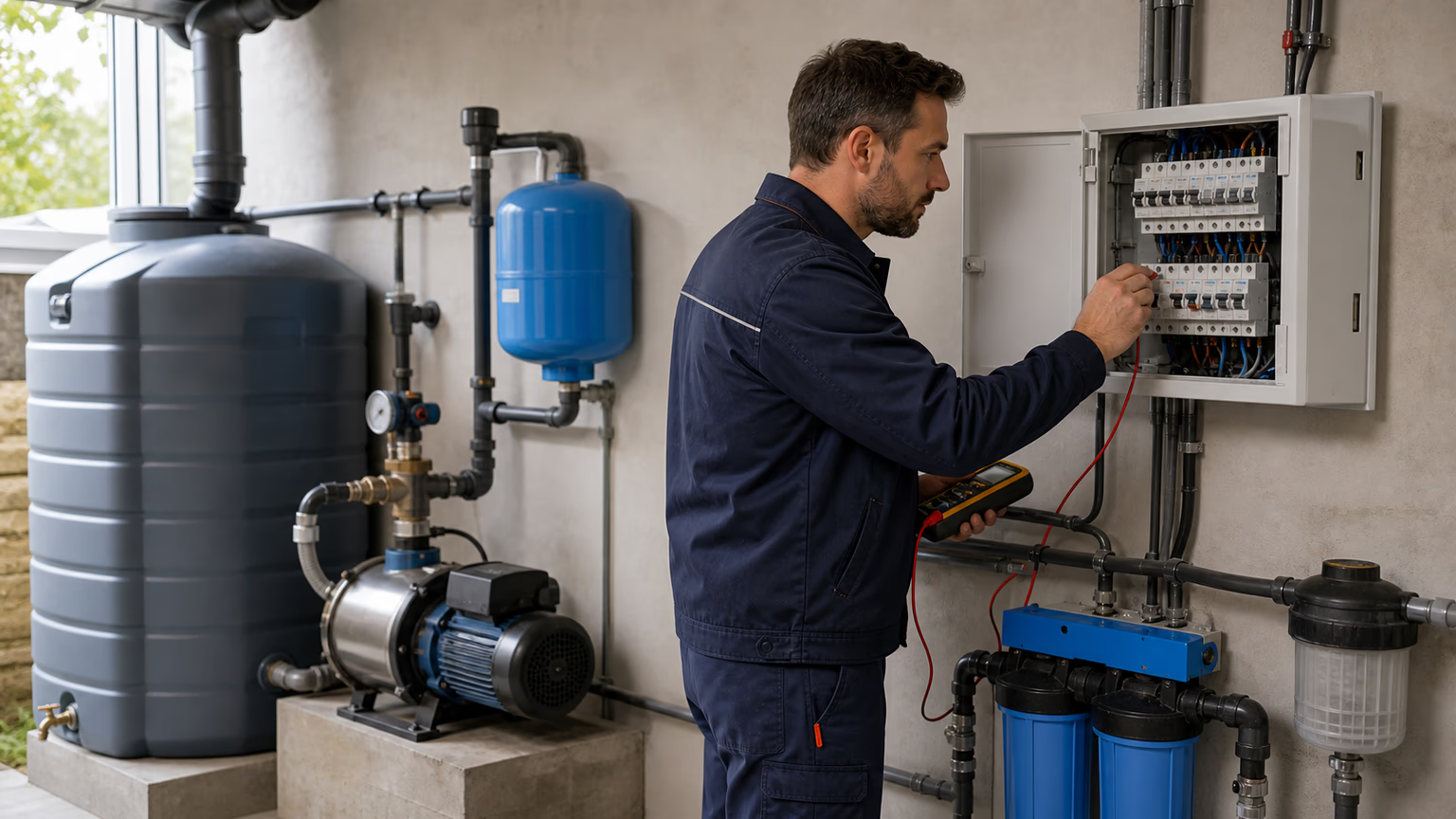
Why a pump stresses your installation
A pump does not simply draw “its rated power”. On start-up it can pull a higher inrush current, especially where the circuit is long, the pump is labouring, or it restarts frequently.
Most guides simply list causes: faulty appliance, overload, insulation fault. It is more useful to learn to observe methodically: what trips, when, and with which appliances running.
Warning signs to take seriously
- The breaker trips when the pump starts.
- The outdoor socket gets warm or feels loose.
- An extension lead stays plugged in all season.
- The enclosure is exposed to rain or to sprinklers.
- The pump restarts very often — a possible sign of a leak or a misadjusted pressure switch.
If the consumer unit is old, poorly labelled, or several garden appliances share one circuit, get a qualified electrician’s view before adding a pump.
Remember: never answer a trip by fitting a larger breaker without diagnosing first. The breaker protects the cable; if it trips, it is telling you something.
Electrical protection to plan for
| Equipment | Protection expected | Common mistake |
|---|---|---|
| Surface pump | Suitable circuit, sound socket, residual current protection | A multi-way adaptor in a damp room |
| Booster set | Controlled starting, ventilation, clearly labelled enclosure | Short cycling left undiagnosed |
| Automatic watering | Protected transformer or controller | Cables run along the ground unprotected |
For a tidy installation, the hydraulics must be planned alongside the electrics: pipe runs, pump position, maintenance access and cable protection are decided together.
Special case: pump and outdoor enclosure
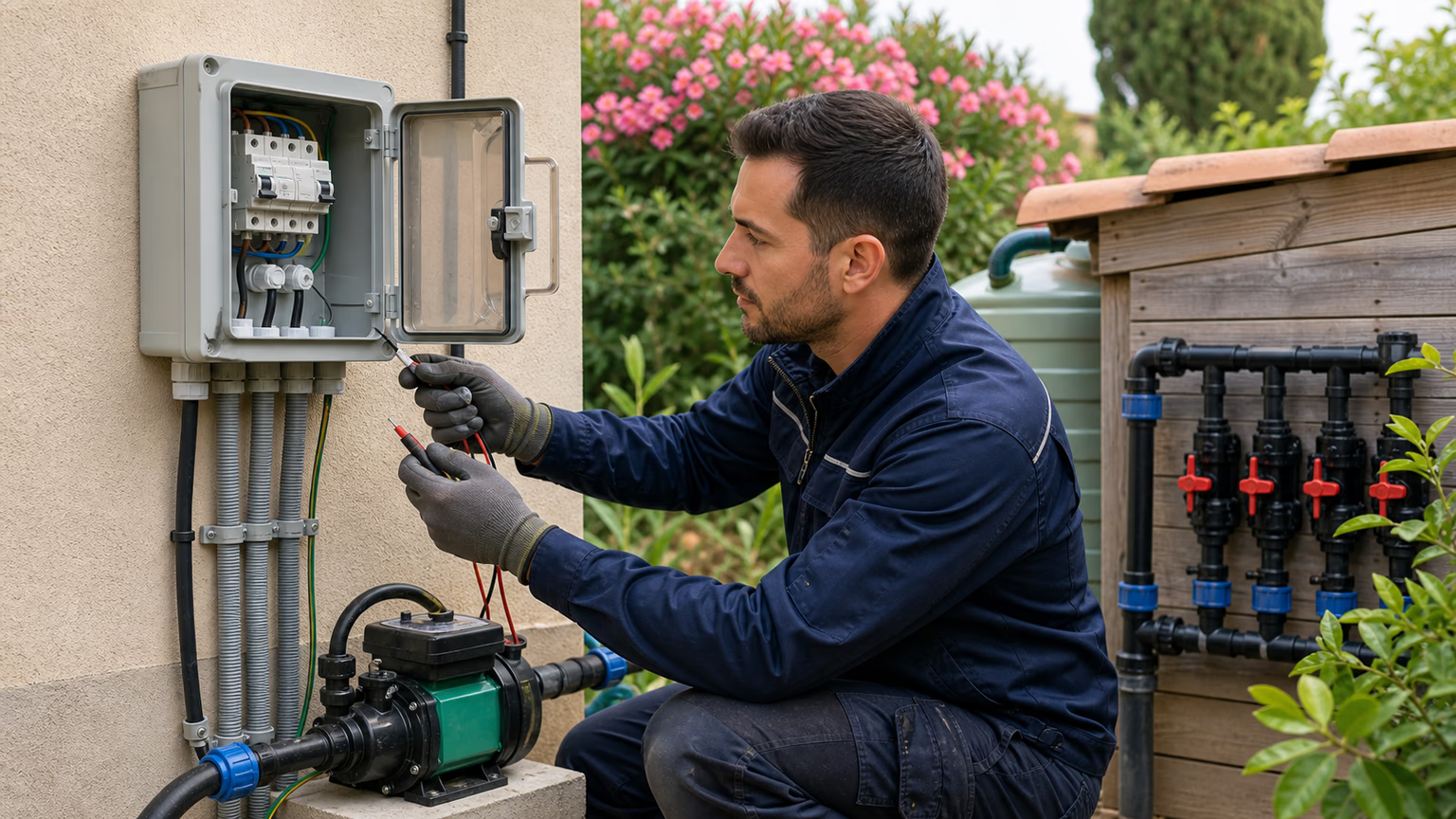
Outdoors, safety rests on three details that rarely appear on a quick quotation: the enclosure must suit the exposure, the cables must be mechanically protected, and residual current protection must genuinely be in place.
A pump that “works when you plug it in” is not necessarily a compliant installation. What counts is how it behaves over time: heat, damp, trips, ageing of the socket.
Frequently asked questions
Can a tank pump be run from an extension lead?
For a one-off test with suitable equipment, it may pass. For regular use you need a dedicated supply, protected and correctly sized.
Why does the pump trip the breaker?
Common causes are circuit overload, an insulation fault, damp, a damaged socket, or a pump labouring mechanically.
A quick self-check before calling a professional
Before calling anyone out, note the symptoms precisely. A pump that always trips on start-up points to a different cause than one that trips after several minutes.
| Symptom | Useful observation | Possible cause |
|---|---|---|
| Trips immediately | Which appliance is connected on its own? | Appliance fault or insulation fault |
| Trips after several minutes | Is the pump getting hot? | Overload, labouring pump, ventilation |
| Hot socket | Is there an extension lead or adaptor? | Poor contact or unsuitable circuit |
| Very short cycles | Pressure switch, leak, vessel, valve | Hydraulic settings to review |
This observation does not replace an electrical inspection. It helps you state the problem clearly: “the tank pump trips the RCD as soon as it starts” is far more useful than “there’s an electrical problem”.
Worth remembering: diagnosing a pump is always two-sided. You have to look at the hydraulics and at electrical safety. A perfectly healthy pump can still trip an unsuitable installation.