
A “more self-sufficient” home is not a pile of equipment — a tank, a pump, some solar panels and a charger. It is a matter of organising networks. Harvested water, pumping, electricity consumption and vehicle charging form a single technical whole.
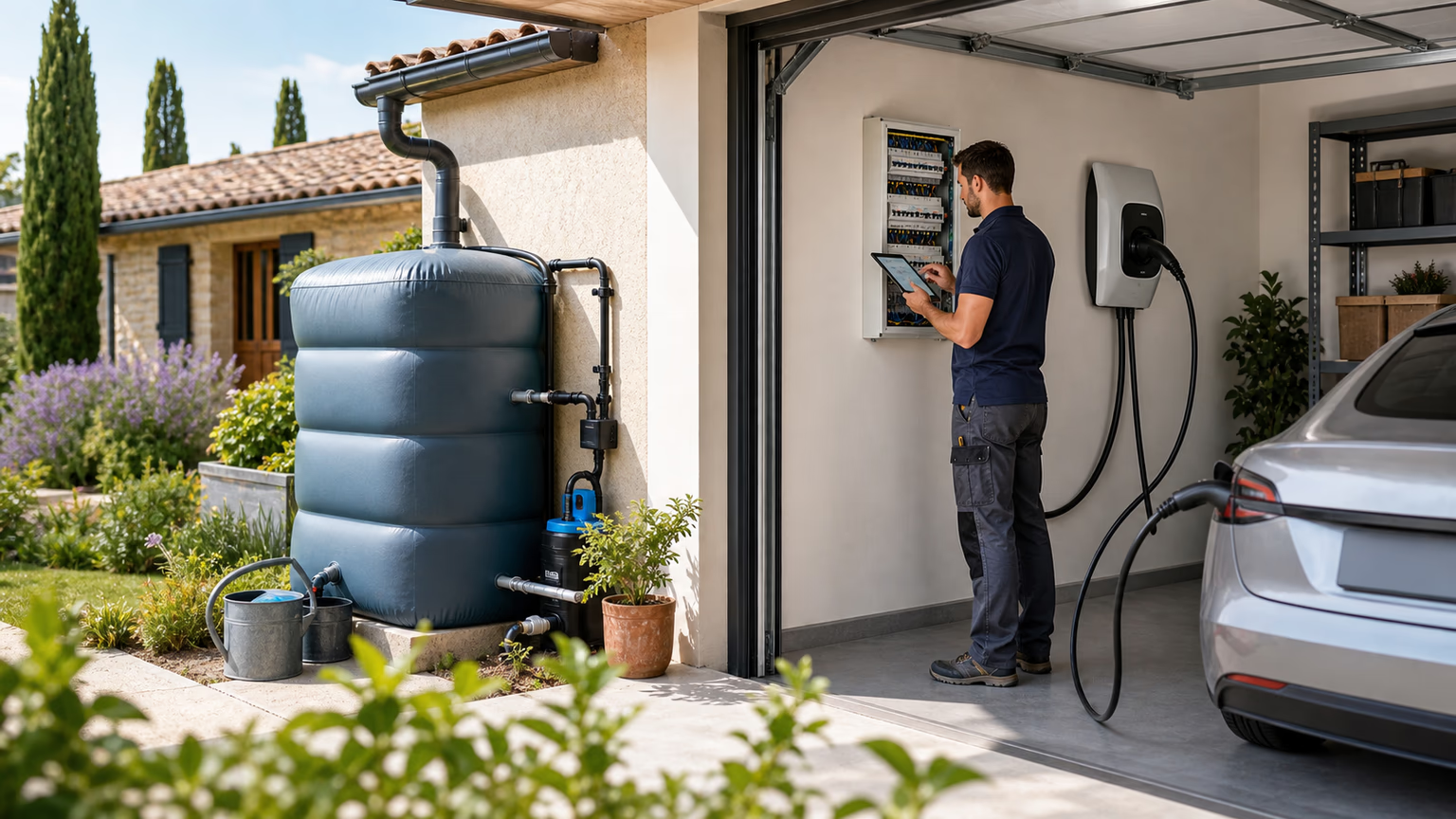
Network thinking before equipment thinking
A rainwater tank changes how water moves around the house. A pump adds a piece of electrical equipment. An EV charger often becomes one of the largest loads in the home. Each element shifts the balance of the whole.
The right approach starts with a simple plan: where the water arrives, where it is stored, where it is pumped from, where the consumer unit sits, where the vehicle parks, and which appliances can run at the same time.
Tank and pump: what to size
Tank volume depends on the collecting roof area, local rainfall and real uses: garden, cleaning, targeted watering, technical reserve. The pump depends on the flow needed, the head and how often it runs.
The Flocea range lets you think in usable volume and installation terms, but sizing always comes back to the site: ground, access, distance to the consumer unit and intended uses.
EV charger: power, dedicated circuit and load shedding
An EV charger is not a heavy-duty socket bolted on wherever convenient. It needs a dedicated circuit, suitable protection, and some thought about the power available at the property.
An installer qualified for charging equipment can confirm the power available, the cable route, the residual current protection, and whether load shedding is needed if several appliances may run together.
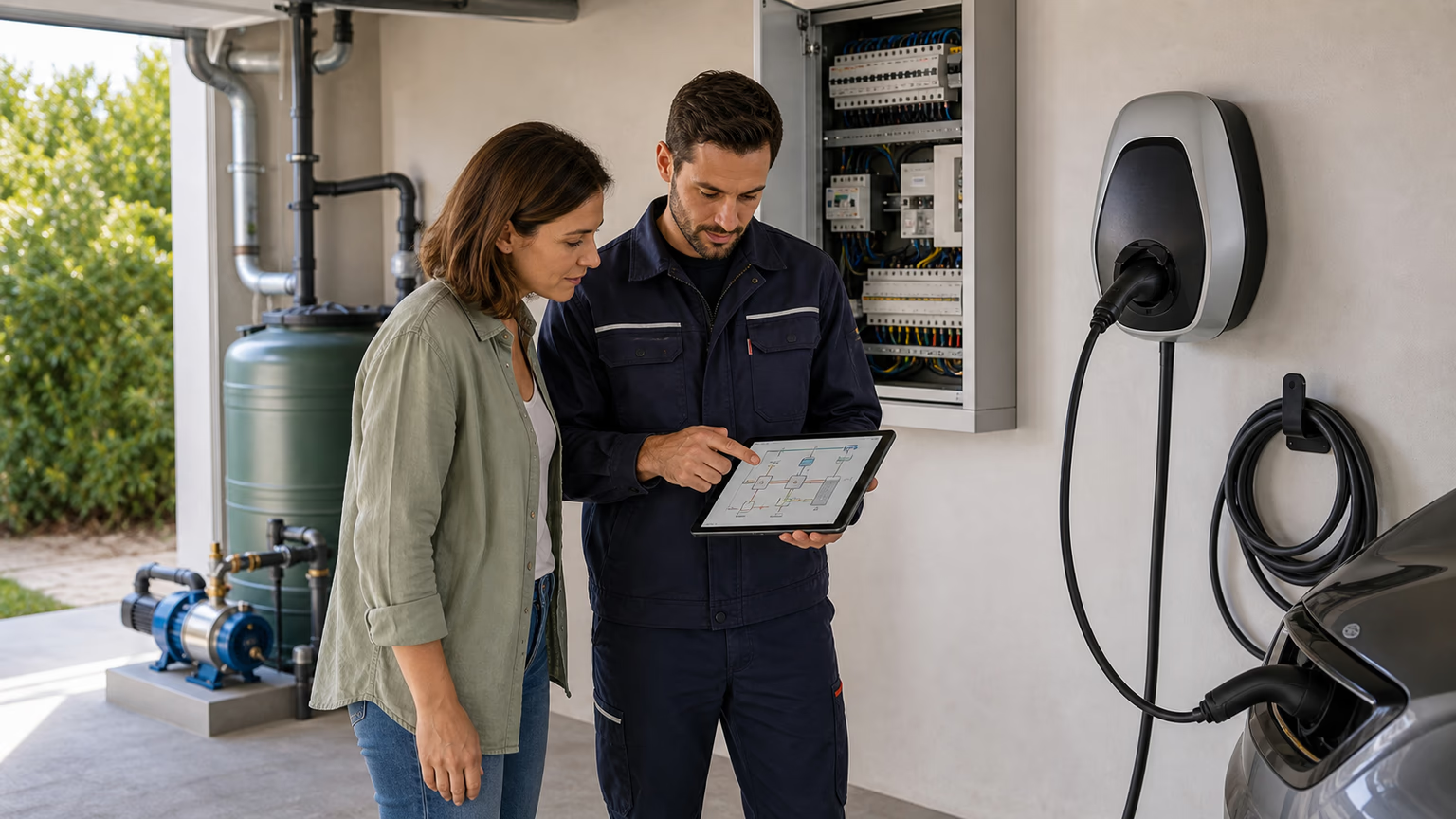
The right order of works
| Stage | Decision | Why |
|---|---|---|
| 1 | Plan of roof, tank, garage and consumer unit | Avoid networks crossing each other |
| 2 | Sizing the tank and pump | Match volume, flow and filtration |
| 3 | Audit of the consumer unit | Know the headroom available before charger and pump |
| 4 | Install the charger with load shedding if required | Protect the supply capacity and the circuits |
Remember: the most reliable self-sufficient home is rarely the one with the most equipment. It is the one where each piece has its place, its protection and its maintenance access.
What to take away
Tank, pump and charger coexist perfectly well when the project starts from the consumer unit, the actual uses and the service routes. The gain is twofold: less waste and fewer breakdowns.
Three scenarios for sizing without overloading
Not every home needs the same level of equipment. A small house with occasional watering, a main residence with an electric vehicle, and a holding with a workshop face very different limits.
| Scenario | Likely equipment | Main point to watch |
|---|---|---|
| House with a garden | Tank of 3 to 10 m³, simple pump | Outdoor socket and protection from damp |
| Comfort-equipped house | Pump, air conditioning, EV charger | Available power and simultaneous use |
| Technical household | Large reserve, booster set, workshop, charging | Consumer unit, dedicated circuits, maintenance access |
Simultaneity is usually the real issue. An irrigation pump, air conditioning, a water heater and vehicle charging can all land in the same hour if nobody has thought it through.
Sticking point: if the services drawing does not show where water, cables and maintenance access run, it is too early to buy anything. A self-sufficient home is drawn before it is equipped.
Mistakes to avoid
- Installing the charger before knowing the garage’s other electrical loads.
- Siting the pump far from the consumer unit without planning a protected route.
- Choosing the tank on volume alone, without thinking about overflow, filtration and access.
- Adding more “off-grid” equipment without a shared operating scenario.