
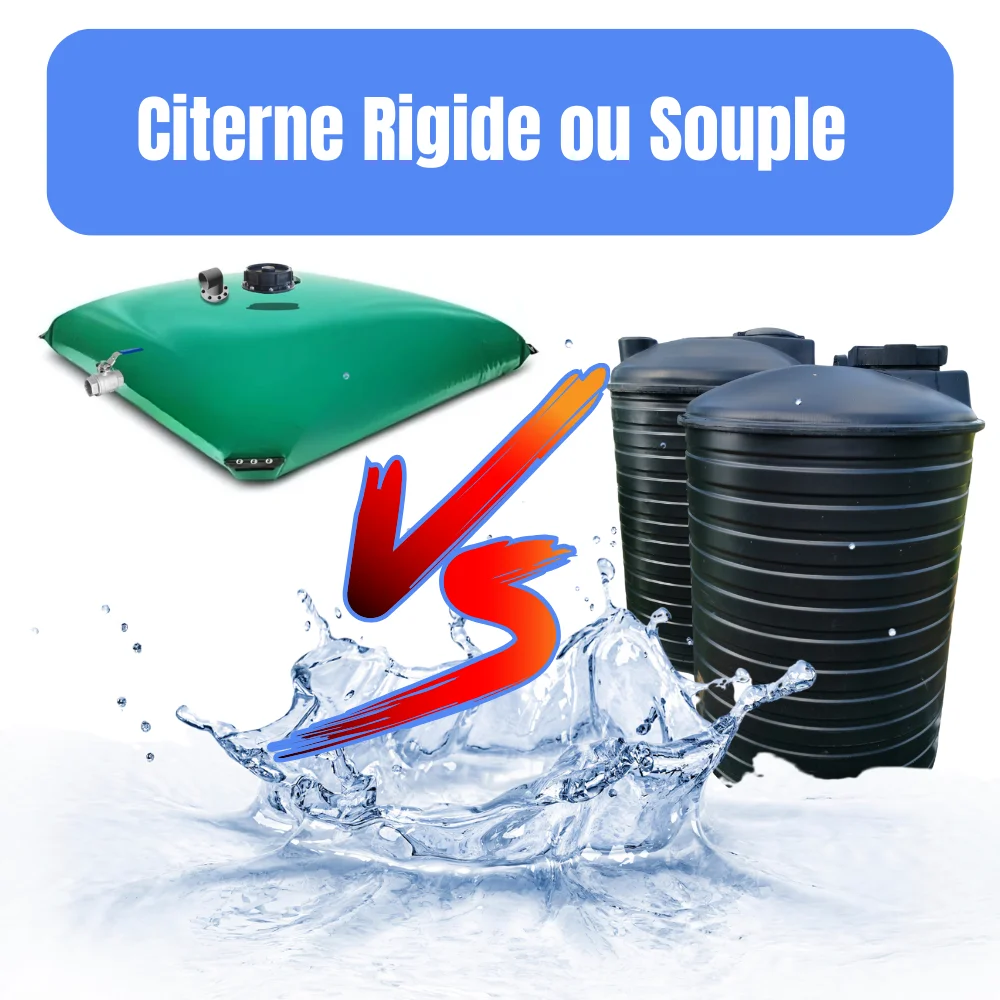
Pillow tank or rigid tank: a complete comparison to make the right choice
Contents
Water tanks: flexible versus rigid
When it comes to storing water — for rainwater harvesting, watering a vegetable plot or as a fire-water reserve — the choice between a pillow tank and a rigid tank matters.
The two types have distinct characteristics suited to different needs and settings. Below we compare them in detail, with concrete figures, to help you make the soundest choice for your storage project.
| Characteristics | Pillow tank | Rigid tank |
|---|---|---|
| Weight (empty, 10,000 L) | 40 kg | 500 kg |
| Average installation time | 3–4 hours | 2–3 days |
| Average cost (10,000 L, installation included) | 2,500 € | 6,000 € |
| Average lifespan | 15–20 years | 40–50 years |
| Adaptability to space | Very flexible, needs around 30% less space | Less flexible, often buried |
| Annual maintenance cost (10,000 L) | 50 € | 100 € |
| Typical maximum capacity | 300,000 L | 500,000 L |
| Recommended use | Domestic use, temporary irrigation | Large volumes, municipal installations |
Pillow tanks: a modern, adaptable solution
Advantages of pillow tanks
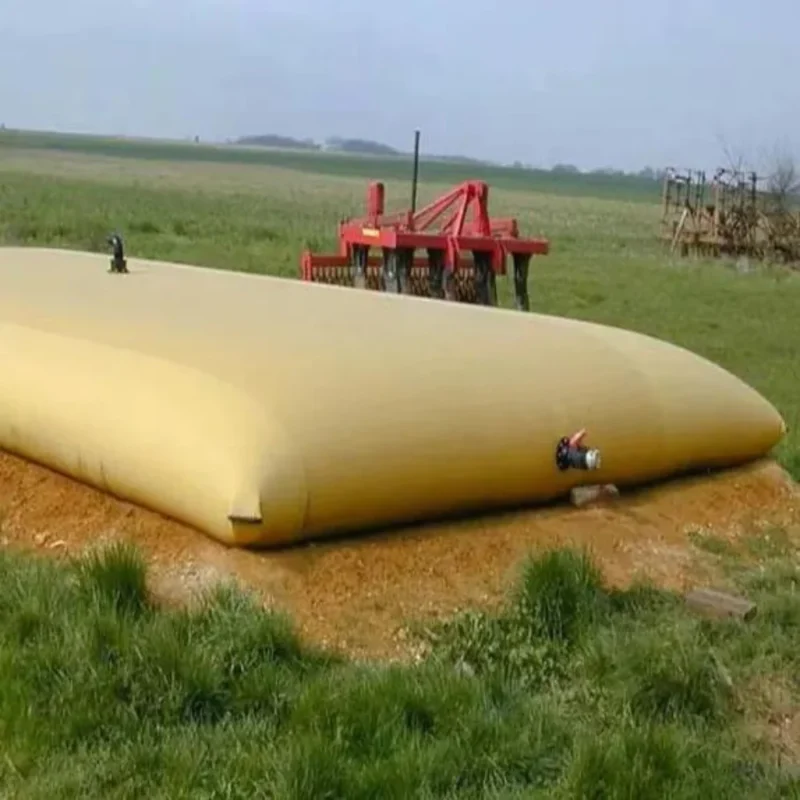
- Light weight and mobility: a 10,000-litre pillow tank weighs just 40 kg empty, against 500 kg for an equivalent rigid polyethylene tank. That lightness makes transport and installation far easier, especially where access is difficult.
- Fast installation: a pillow tank takes on average 3 to 4 hours to install, against 2 to 3 days for a buried rigid tank. That speed cuts labour costs appreciably.
- Adaptability: pillow tanks fit into spaces up to 30% smaller than those required by rigid tanks of the same capacity. That makes them ideal above ground or in confined spaces such as crawl spaces.
- Lower cost: pillow tanks cost on average 40% less to buy than rigid tanks of equivalent capacity. Installation costs fall by 60 to 70% because there are no earthworks.
- Impact resistance: flexible fabric absorbs knocks far better than a rigid wall, which can crack. A pillow tank deforms and returns to shape without structural damage.

Potential drawbacks of pillow tanks
- Lifespan: manufacturers put the average life of a pillow tank at 15 to 20 years, against 30 to 50 years for a rigid tank in concrete or high-density polyethylene.
- Vulnerability to punctures: a small share of pillow tanks develop punctures in their first years, almost always from poorly prepared ground or sharp debris underneath.
Rigid tanks: the traditional solution
Advantages of rigid tanks
- Durability: according to the American Water Works Association (2020), concrete tanks last 50 years on average, with well-maintained installations exceeding 100 years.
- Stability: rigid tanks withstand winds of up to 160 km/h without shifting, in line with the criteria of European standard EN 1991-1-4.
- Installation versatility: most rigid tanks are installed buried or partly buried, which blends better into the landscape and shields them from temperature swings.
- Storage capacity: rigid tanks are available up to 500,000 litres as a single unit, against a typical maximum of 300,000 litres for pillow tanks, according to leading European manufacturers.
Drawbacks of rigid tanks
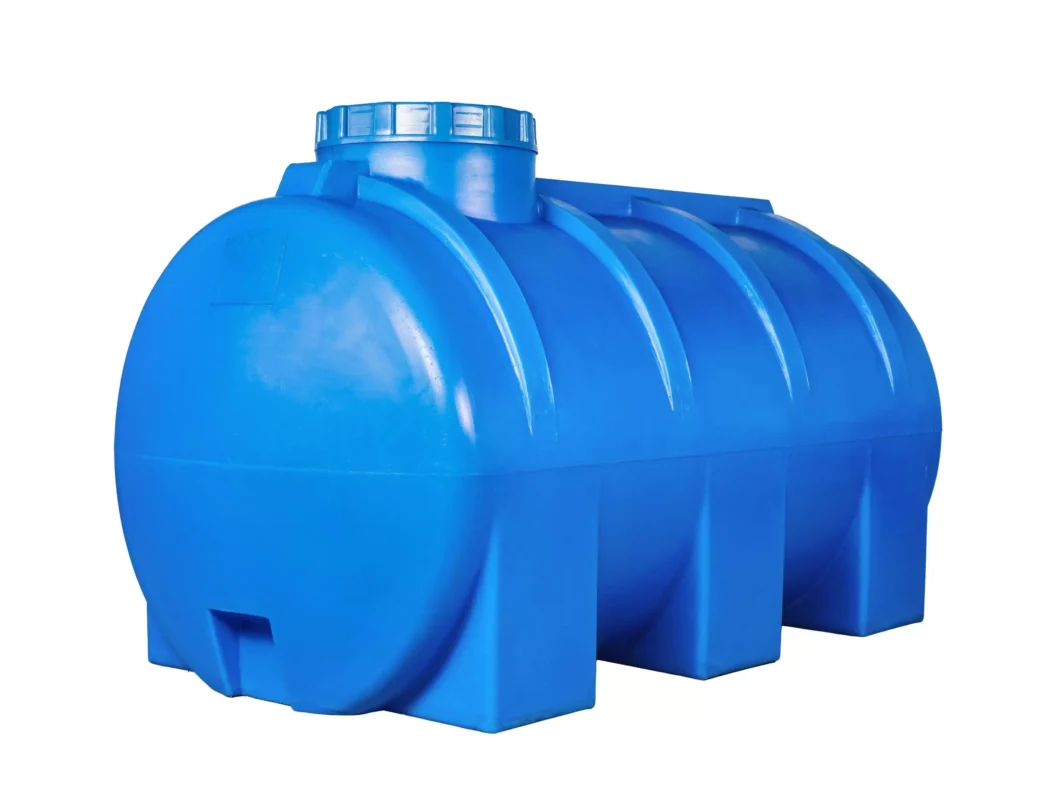
- Complex installation: burying a rigid tank takes on average around 20 hours of work for a three-person team, including earthworks and containment systems to protect groundwater.
- High cost: the total installed cost (materials and labour) of a buried 10,000-litre rigid tank is around €5,000 to €7,000, against €2,000 to €3,000 for a pillow tank of the same capacity.
- Lack of flexibility: moving a rigid tank once installed costs on average 60% of a new installation, making later changes expensive and complicated.
Head to head: flexible versus rigid
Installation and commissioning
- Flexible: around 3.5 hours on average for a 10,000-litre tank, with straightforward connection to existing collection systems.
- Rigid: around 2.5 days on average for a buried 10,000-litre tank, including earthworks and fitting an inspection hatch.
Costs (purchase and installation)
- Flexible: average total cost of €2,500 for a 10,000-litre tank, installation included.
- Rigid: average total cost of €6,000 for a buried 10,000-litre tank, installation included.
Durability and longevity
- Flexible: average life of 17.5 years, with UV resistance certified for at least 10 years on premium models.
- Rigid: average life of 40 years for polyethylene and 50 for concrete, with better resistance to micro-organisms and algae.
Adaptability and versatility
- Flexible: fits spaces 30% smaller than equivalent rigid tanks, ideal above ground or in restricted spaces.
- Rigid: mostly installed buried or partly buried, blending into the landscape and protected from temperature swings.
Maintenance
- Flexible: average annual maintenance cost of €50 for a 10,000-litre tank, mainly cleaning and checking the fittings.
- Rigid: average annual maintenance cost of €100 for a 10,000-litre tank, including periodic inspections and removal of sediment and sludge.
Choosing the right tank for your needs
Factors to consider
- Available space: pillow tanks suit restricted or irregular spaces, taking up 30% less room than their rigid equivalents.
- Budget: on a tight budget the pillow tank is usually the better fit, with total installed cost averaging 40% less than rigid solutions.
- Project duration: for a very long-term solution (>30 years) a rigid tank may be preferable, despite the higher upfront investment.
- Intended use: some specific uses, such as storing effluents or liquid fertilisers, call for particular materials available in one type or the other.
Recommended use cases
- Pillow tank: ideal for domestic rainwater harvesting, seasonal watering of a vegetable plot, or as an adaptable storage solution for businesses. Below 20,000 litres it is the prevailing choice for households, and at equal capacity it costs on average less than half as much.
- Rigid tank: recommended for large permanent volumes, municipal installations or long-term fire-water reserves. Most municipal installations and fire-water reserves choose rigid tanks, chiefly for their longevity.
Conclusion: making an informed choice
The choice between flexible and rigid depends on your specific needs, your budget and your space constraints. Pillow tanks offer flexibility and ease of installation that are hard to match, at an initial cost averaging 40% less.
They are particularly suited to fast installation and restricted spaces.
Rigid tanks, though costlier to install, excel in long-term durability and stability, with concrete models lasting beyond 50 years.
Whatever you decide, assess your current and future needs carefully. Water storage is a significant investment in managing the resource sustainably. It is worth obtaining several quotations and seeking professional advice for an accurate assessment.
Frequently asked questions about flexible and rigid water tanks
- Can a pillow tank be buried?
- No — pillow tanks are not designed to be buried. They are installed above ground or in sheltered spaces such as crawl spaces.
- What is the average lifespan of a rigid tank?
- Average lifespan is 40 years for polyethylene tanks and 50 years for concrete, according to American Water Works Association data (2020).
- Do pillow tanks withstand frost?
- Yes — modern pillow tanks are designed to withstand temperatures down to −30 °C. That said, in regions that regularly drop below −20 °C, extra precautions such as insulation or heating are advisable.
- How is a pillow tank filled and pumped?
- Filling is generally done from the top, through a hatch or a dedicated pipe. Pumping can be done either with a submersible pump inside the tank or with an external pump connected to a dedicated fitting. Most pillow tanks come with standard fittings that make both straightforward.
- Do rigid tanks need particular maintenance?
- Yes — rigid tanks need periodic cleaning to remove the sediment and sludge that build up at the bottom. An annual visual inspection and a full clean every three to five years are recommended, depending on use and water quality.