
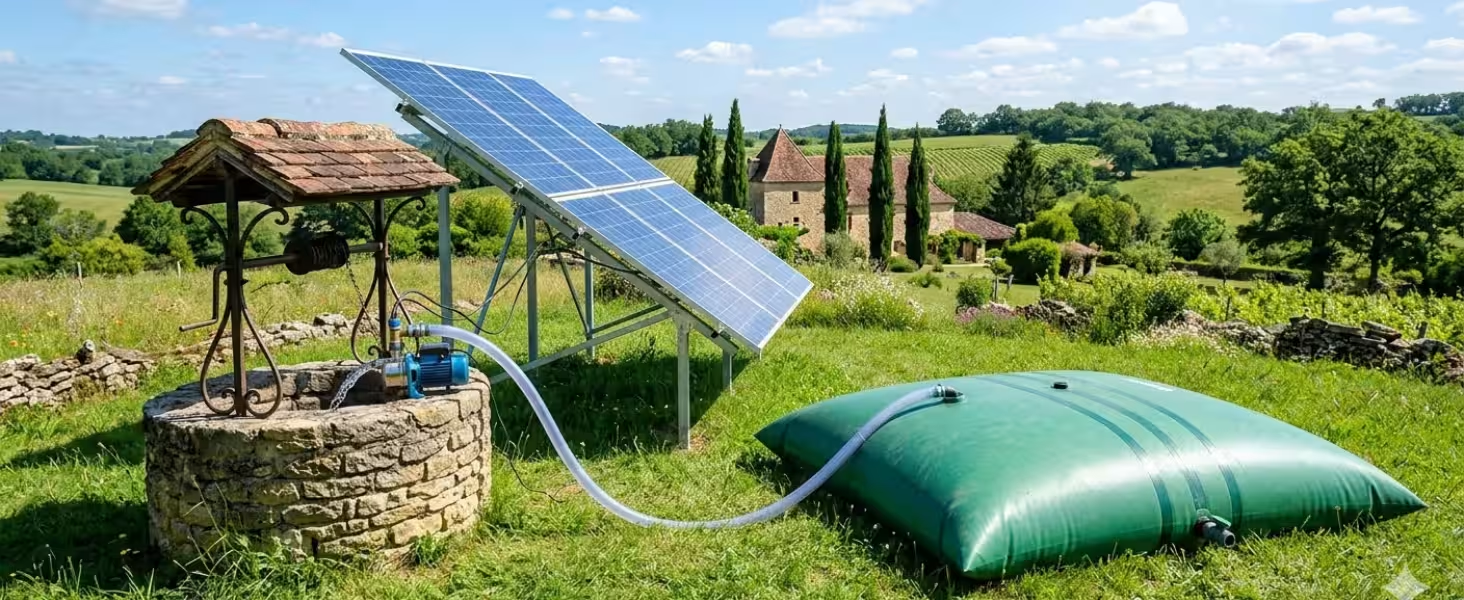
Solar water pumps: the complete guide to choosing well
A solar water pump is a pumping system powered by one or more photovoltaic panels, with no mains connection required. It draws water from a well, a borehole, a river or a tank using nothing but sunlight. It is a self-sufficient, low-running-cost and environmentally sound solution, particularly suited to garden watering, agricultural irrigation, filling tanks or supplying an off-grid site. Whether you need a high-output solar pump for intensive irrigation or a compact model for the garden, this guide covers every case.
Contents
How a solar water pump works
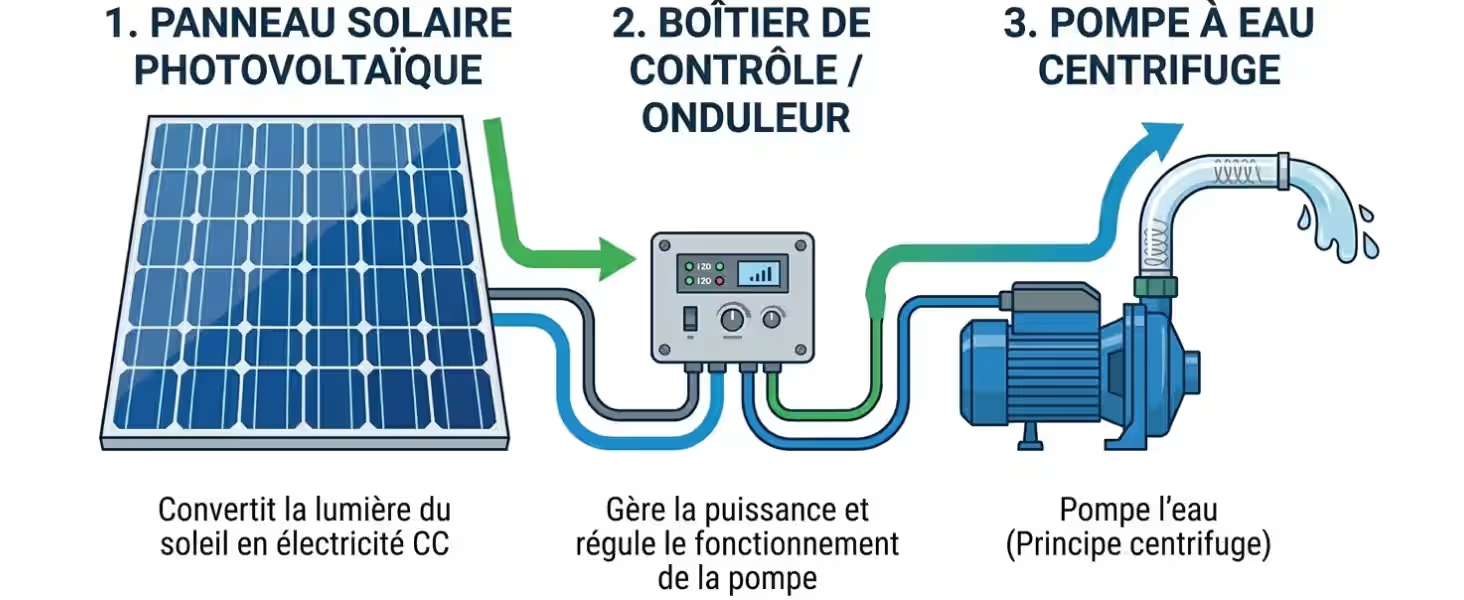
A solar water pump works by converting light energy directly into mechanical energy. Unlike an engine-driven pump burning fuel, or an electric pump wired to the mains, it draws all its energy from solar radiation. Three components make up the system:
The solar panel (photovoltaic module) captures sunlight and converts it into direct current (DC). The more powerful the panel (rated in watt-peak, Wp), the higher the flow rate it can support. A 200 Wp panel is enough to water a small garden, while an agricultural irrigation set-up will call for 1,000 to 2,000 Wp.
The controller sits between panel and pump. It regulates voltage and protects the motor from surges and changes in sunlight. The better models include maximum power point tracking (MPPT), which extracts the most energy from the panel even under partial sun.
The pump itself is an electric motor coupled to a hydraulic mechanism (centrifugal, diaphragm or helical, depending on the model). Powered by the panel, it draws water from the source and delivers it to a tank, an irrigation network or a pillow tank.
The different types of solar pump
Which type you choose depends mainly on your water source (depth, distance) and the flow rate you need.
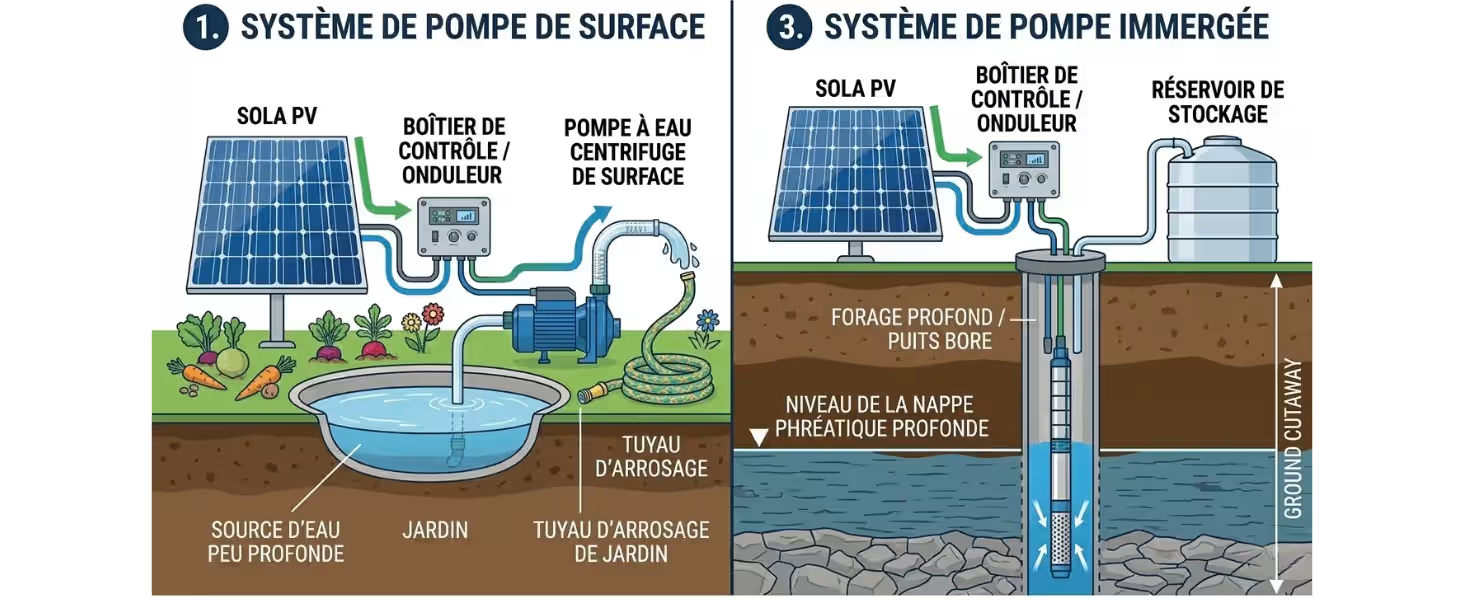
Surface pump versus submersible pump
The surface pump sits beside the water source — river, pond, open tank. It draws water from a maximum depth of 7 to 8 metres. It is the simplest to install and maintain, and suits garden watering, filling tanks or transferring water between reservoirs.
The submersible pump goes straight down the well or borehole. It can lift water from 20, 50 or even more than 100 metres. It is the only option for deep boreholes, but costs more and installing it takes some technical know-how.
Centrifugal pump versus self-priming pump
The centrifugal pump uses the centrifugal force of an impeller to move water. It delivers the highest flow rates (up to 25,000 litres per hour on the most powerful models). Our high-output models — the 48 V solar centrifugal pump at 5,000 L/h and the 72 V solar centrifugal pump at 25,000 L/h — are particularly suited to agricultural irrigation and large volumes. A centrifugal pump must be primed before first use.
The self-priming pump can start even with air in the suction line. That is a practical advantage where manual priming would be awkward. See our full guide to self-priming pumps.
| Type | Max depth | Typical flow | Main use |
|---|---|---|---|
| Surface centrifugal | 7-8 m | 3,000 à 25,000 L/h | Watering, tanks, transfer, agriculture |
| Surface self-priming | 7-8 m | 1,500 à 8,000 L/h | Garden, pond, smallholding |
| Submersible (borehole) | 20-100+ m | 500 à 5,000 L/h | Well, borehole, drinking water |
How to choose your solar water pump
Before buying, ask yourself these five questions in order:
1. What is your use?
Garden watering, agricultural irrigation, filling a pool, supplying a tank, drinking water for an off-grid site? The use determines the flow rate you need and the type of pump.
2. Where does your water come from?
A well or borehole (how deep?), a pond or watercourse at surface level, a collection tank? Beyond 8 metres deep, you need a submersible pump.
3. What flow rate do you need?
A small garden needs 1,000 to 3,000 L/h. For agricultural irrigation or filling a tank quickly, aim for 10,000 L/h and above. Our 36 V solar pump at 3,000 L/h suits a garden or small pond. For mid-range flows (5,000 L/h), the 48 V centrifugal pump is a good fit. For intensive irrigation, the 72 V centrifugal at 25,000 L/h or the 96 V centrifugal are the benchmarks.
4. What is the total head?
That is the delivery height plus friction losses in the pipework. If you draw from 5 m down and deliver to a tank 10 m up, your total head is around 15 m (plus friction losses). The higher it is, the more powerful the pump must be. Use the calculator below to estimate your sizing.
5. How much sun does your area get?
In southern England a solar pump runs at full output for 5 to 6 hours a day in summer; in Scotland and the north, expect closer to 4 hours. That affects both the daily volume pumped and the panel power required.
Interactive sizing calculator
Enter your parameters to identify the Flocea solar pump model that fits your project:
Which solar pump model for my project?
Answer the four questions below for a tailored recommendation.
What solar panel power for which pump
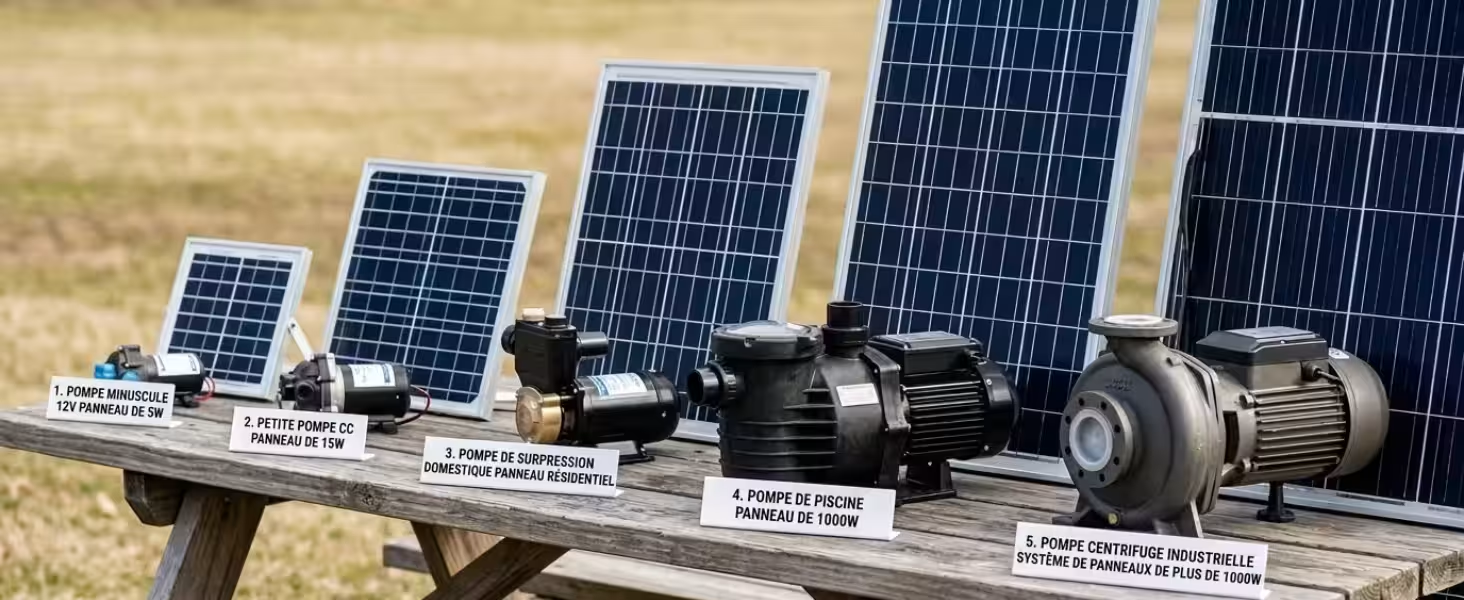
The panel must deliver a voltage and power compatible with the pump. Here is a guide for surface pumps:
| Pump voltage | Recommended panel power | Flow achieved | Typical use |
|---|---|---|---|
| 24V | 100 à 200 W | 1,500 à 3,000 L/h | Garden, light watering |
| 36 V — View product | 200 à 400 W | 2,000 à 3,000 L/h | Watering, domestic tank |
| 48 V — View product | 400 à 800 W | 5,000 L/h | Irrigation, pool, large volumes |
| 72 V — View product | 800 à 1,200 W | up to 25,000 L/h | Agricultural irrigation, livestock |
| 96 V — View product | 1,500 à 2,000 W | up to 25,000 L/h | Intensive agriculture, large-capacity tank |
Note: these figures are indicative for surface pumps in good sunlight. Borehole submersible pumps generally need more power for the same flow because of the delivery height. Always check the pump’s data sheet for the minimum panel power required.
One important point: actual flow varies with sunlight. Around midday you get the maximum; in the morning and late afternoon it tapers off. That is why it usually makes sense to pump water into a storage tank during sunny hours and draw from that reserve when you need it.
Solar water pumps for agriculture
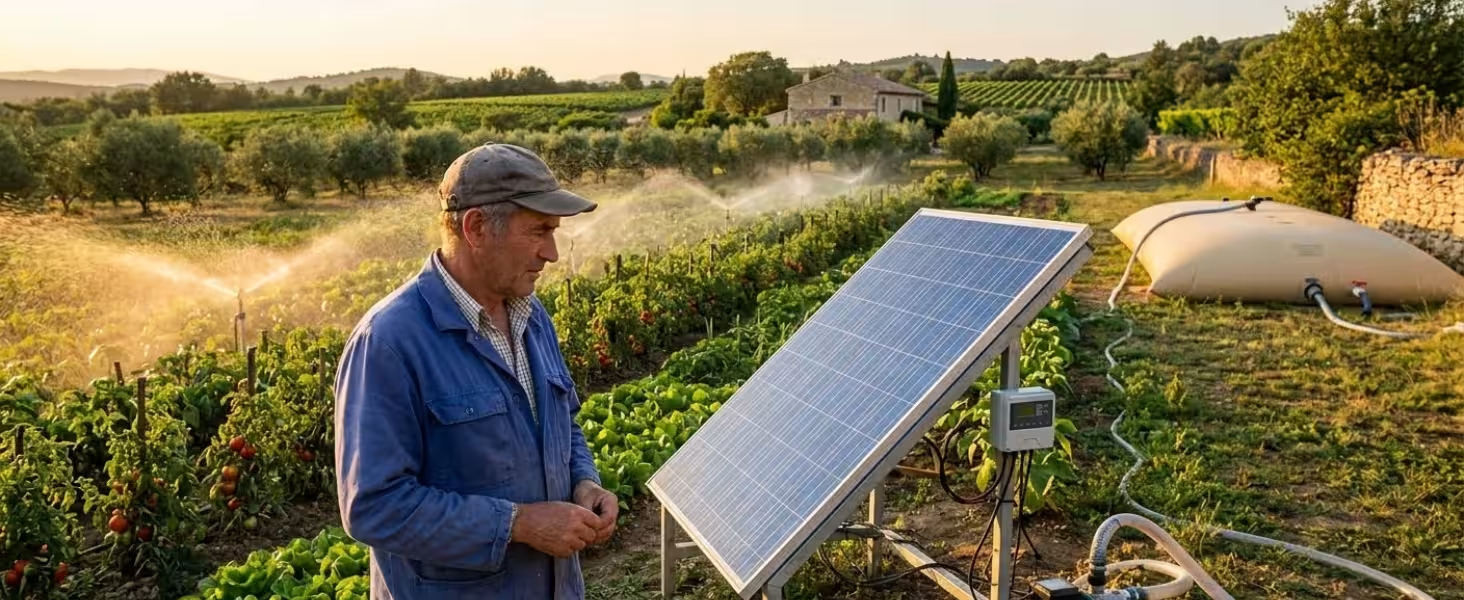
Agriculture is the most demanding — and most rewarding — use for a high-output solar pump. Drip irrigation, sprinkling across several hectares, watering livestock, filling farm tanks: all need substantial flow in the middle of the day, exactly when a solar pump performs best.
Why solar pumping suits farming so well: agricultural water demand naturally coincides with daylight — watering and filling happen during the day, when the panel produces most. No batteries, no electricity bill, no need to run a supply to distant fields.
Irrigating large areas
To irrigate several hectares, flow rate is the sizing parameter. A hectare of arable crops consumes 30 to 50 m³ a week on average during water stress. With our 72 V solar centrifugal pump (25,000 L/h) you can fill a 50 m³ tank in just 2 hours of decent sun — the reserve then covers night-time or overcast irrigation. For the most intensive operations, the 96 V centrifugal gives the same flow at a higher head (24 m against 18 m), making it better suited to a large lift.
Watering livestock
Watering typically requires 50 to 80 litres per adult cow per day. For a herd of 100, the 36 V solar pump is ample (3,000 L/h = 18,000 L in six hours). For large sheep or goat holdings, the 48 V centrifugal gives comfortable headroom.
Pairing a solar pump with a pillow tank
The most effective combination in farming: a powerful solar pump fills a large-capacity pillow tank during sunny hours. The tank acts as a hydraulic buffer — it absorbs weather-driven variations in flow and guarantees steady pressure and volume for irrigation, even at night or under cloud. This pairing removes the need for batteries while giving complete water autonomy.
| Agricultural use | Flow required | Recommended model | Panel power |
|---|---|---|---|
| Market gardening / pro plot (< 1 ha) | 2,000–5,000 L/h | 48 V centrifugal | 600–800 W |
| Herd watering (50–150 head) | 3,000 L/h | 36 V or 48 V | 400–600 W |
| Surface irrigation (1–5 ha) | 5,000–15,000 L/h | 72 V centrifugal | 900–1,200 W |
| Intensive agriculture (> 5 ha) | > 15,000 L/h | 96 V centrifugal | 1,500–2,000 W |
Advantages and limits of solar water pumps
The advantages
Zero electricity cost. Once installed, the energy is free. On a holding pumping 10,000 litres a day for six months, the saving on the electricity bill runs to several hundred euros a year. The pump typically pays for itself in two to four years.
Complete autonomy. No mains connection needed. It is the ideal solution for off-grid sites: distant fields, sheepfolds, unconnected country houses, rural water points. It is also an asset during power cuts: your pump keeps running as long as there is sun.
Simple installation. A surface solar pump goes up in a few hours: mount the panel on its frame, connect the controller and pump, attach the suction and delivery hoses. No heavy works, no cable trench, and no permit in most cases.
Minimal maintenance. No fuel to store and few wearing parts. Cleaning the panel regularly with clean water (two or three times a year) and checking the fittings is enough. The brushless motors in modern pumps last far longer than conventional brushed motors.
Low environmental impact. No CO₂ emissions in operation. No noise, unlike generators or engine-driven pumps. That argument weighs more and more for councils and farms committed to sustainability.
The limits to be aware of
Dependence on sunshine. Flow varies with weather and season. Under cloud, a solar pump ticks over. In winter, short days cut the daily volume pumped.
No night-time operation (unless you add batteries). If you need water at night or early morning, plan for buffer storage — typically a tank — or add a battery system, which raises the cost.
Higher upfront investment than a conventional electric pump. But with no running costs (no electricity bill, no fuel), it pays back in two to five years depending on use.
In short: a solar water pump is the soundest choice where you have good sunshine, no mains supply nearby, and a pumping need that falls mainly during the day. For night-time needs or weak light, plan intermediate storage in a tank or reservoir.
Frequently asked questions about solar water pumps
Which solar pump for a 20-metre well?
For a 20-metre well you need a solar submersible pump with a total head of at least 25 to 30 metres (depth + delivery height + friction losses). Allow a 400 W panel as a minimum for a usable flow. For a deeper borehole (50 m and beyond), panel power must rise in proportion.
Does a solar pump work under cloud?
Yes, but at reduced flow. Under cloud a solar panel produces roughly 10 to 30% of its rated power, so the pump ticks over. That is why it pays to store water in a tank on sunny days to have a reserve for grey ones.
Can a solar pump be used to fill a pool?
Yes, entirely possible. For a standard pool of around 40 m³, a high-output solar pump (72 V or 96 V) at 15,000 to 25,000 L/h will fill the basin in two to three sunny days. For simple topping up, a smaller pump is enough.
How long does a solar water pump last?
On average, a good-quality solar water pump lasts 10 to 15 years. The panel lasts longer still — 25 to 30 years. Maintenance is minimal: clean the panel, check the fittings and replace seals every three to five years if needed.
Do you need a battery with a solar pump?
It is not compulsory. Most installations run in direct connection: the panel powers the pump during the day, and the water is stored in a tank for later use. That is the simplest and cheapest arrangement. Batteries are only worthwhile if you need to pump at night or very early, and they add cost and complexity.
How much does a solar water pump cost?
Price depends on power and type. Expect €200 to €500 for a small garden solar pump (24–36 V), €500 to €1,500 for a mid-flow surface pump (48 V), and €1,500 to €3,000 or more for a high-output centrifugal pump (72–96 V) for agriculture or large volumes. See our solar pump range for current prices.
Which solar pump for agricultural irrigation?
For agricultural irrigation, flow is the main criterion. The 48 V centrifugal (5,000 L/h) suits market gardening and small areas. For holdings of 1 to 5 ha, the 72 V centrifugal (25,000 L/h) is the benchmark. For intensive agriculture, choose the 96 V centrifugal. In every case, pairing it with a pillow tank lets you irrigate outside sunlight hours.
Looking for a solar water pump that fits your project? Browse our range of high-output solar water pumps — from the 36 V garden pump to the 96 V centrifugal for agricultural irrigation. Need help choosing? Contact our team — we size your installation free of charge.