Description
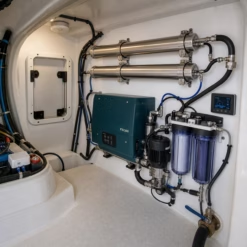
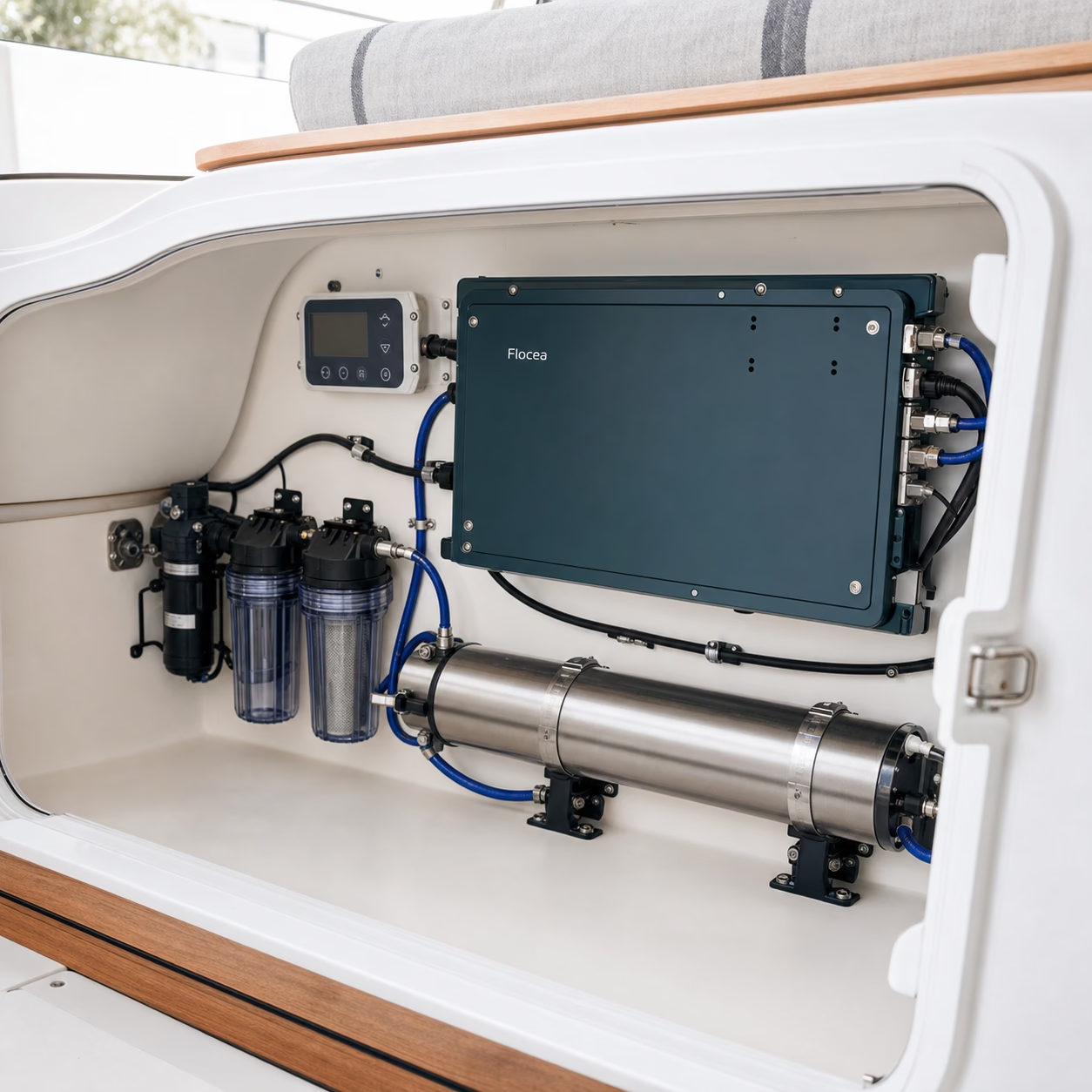
A compact watermaker that produces fresh water on board a yacht without relying solely on port calls. The 30 L/h configuration favours easy integration, low power draw and steady output suited to small crews.
What projects is it for?
- Cruising yacht with a small crew
- Motor boat with a 12 or 24 V system
- Autonomy at anchor or on offshore passages
This marine watermaker is aimed at boats where technical space and battery capacity are limited. Sizing has to bring together daily consumption, available running time, the alternator, the battery bank and the constraints of drawing water under way.

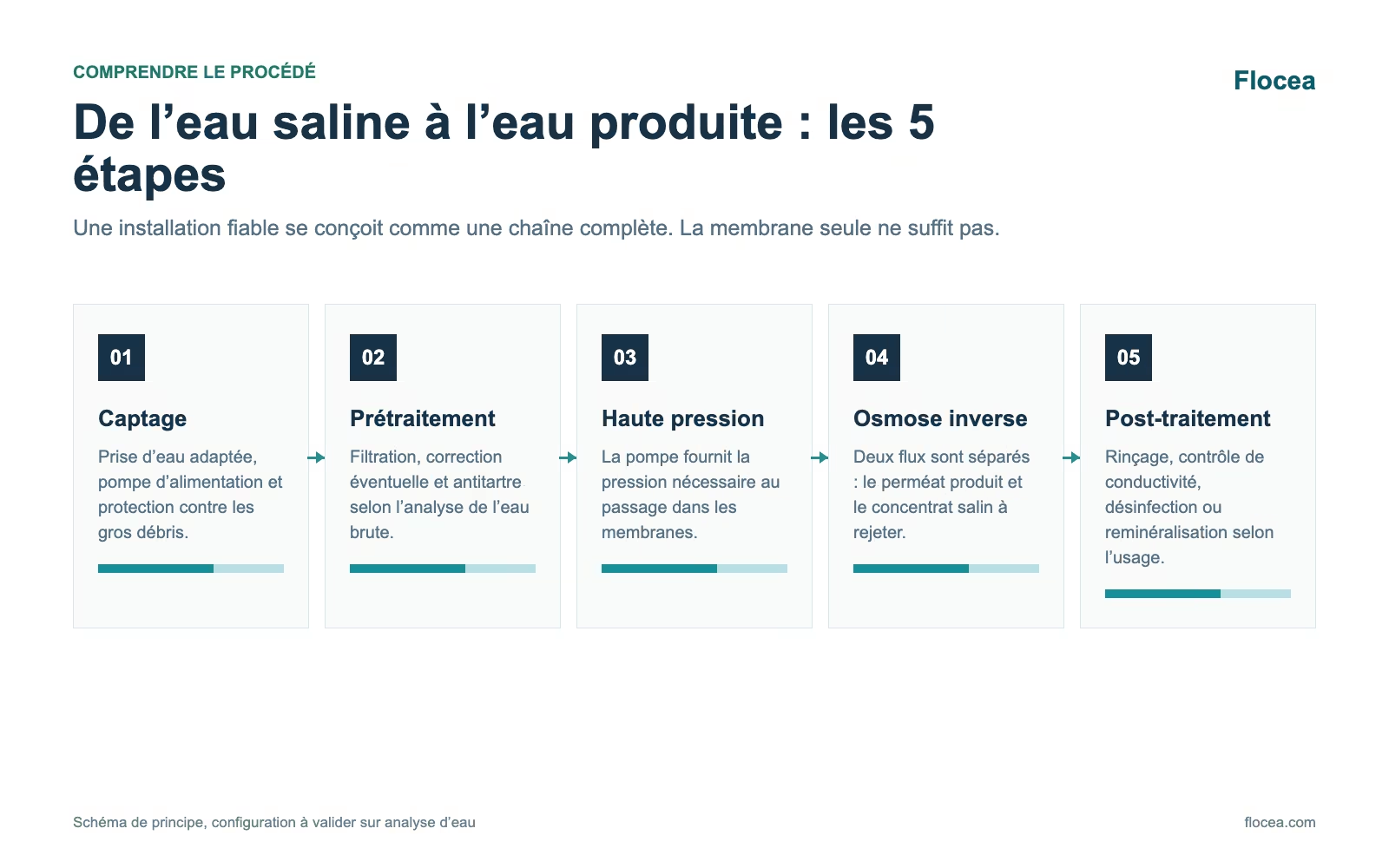
A complete study, not just a membrane
Specification of the proposed configuration
| Nominal output | 30 litres per hour |
|---|---|
| Technology | Seawater reverse osmosis, marine configuration |
| Power supply | 12 or 24 V DC, to be confirmed at quotation |
| Architecture | Modular, to simplify installation on board |
| Pre-filtration | 5 micron cartridge and sea-water intake protection, to be confirmed |
| Flushing | Fresh-water flushing circuit to be provided |
| Product water | Quality to be confirmed according to salinity, temperature and post-treatment |
| Scope of supply | Subject to study; there is no one-size-fits-all installation |
Important: these figures set the framework for the study. The final bill of materials, power draw, recovery rate, permeate quality and dimensions are confirmed at quotation, once the raw water and the site have been validated.

Operation and consumables
On board, flushing discipline and the state of the pre-filter matter as much as the membrane itself. After a lay-up, a preservation procedure prevents biological growth and protects the high-pressure components.
- pre-filter cartridges, replaced according to turbidity and running hours;
- antiscalant or conditioning chemicals where the analysis justifies them;
- membrane cleaning and preservation chemicals for extended shutdowns;
- reverse osmosis membranes, whose life depends on pre-treatment and how the unit is run;
- seals, sensors and pump wear parts, per the maintenance schedule.
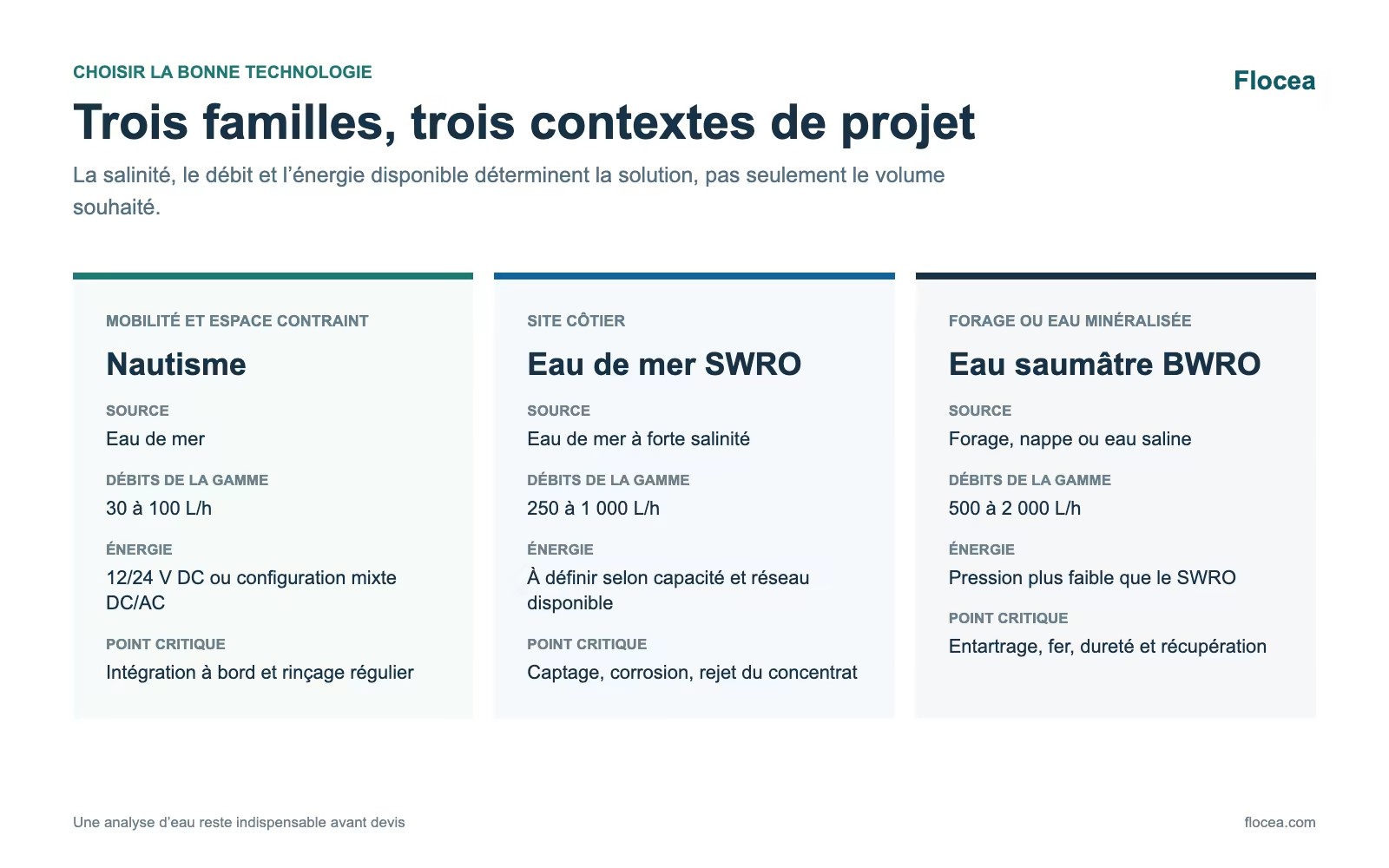
Compare the Flocea range
| Solution | Nominal flow | Raw water | Typical project |
|---|---|---|---|
| Marine 30 | 30 L/h | Seawater | Sailing boat and small craft, building autonomy |
| Marine 100 | 100 L/h | Seawater | Large yacht with a full crew |
| SWRO 250 | 250 L/h | Seawater | Coastal villa, guest accommodation, small camp |
| SWRO 1000 | 1,000 L/h | Seawater | Hotel, farm, construction site, small authority |
| BWRO 500 | 500 L/h | Brackish water | Saline borehole, smallholding, process water |
| BWRO 2000 | 2,000 L/h | Brackish water | Agriculture, industry, community site |

Frequently asked questions
Is a 30 L/h watermaker enough for a crew?
It can suit a small crew provided the daily running time covers real use. The calculation has to include drinking, cooking, showers, washing-up and a safety margin.
Can it run off lithium batteries?
Yes, provided the voltage, available current, protection devices and cable cross-sections are correctly sized. The electrical check is part of the study.
Can it make water in harbour?
Running the unit in polluted or turbid harbour water is not advisable without analysis and suitable pre-treatment. It is better to draw clean water offshore.