
Self-Priming Pumps
Self-priming pumps for tanks, wells and irrigation. The offset suction port clears trapped air more effectively: the pump primes itself, even after a long shutdown, and lifts from around 8 metres.
-

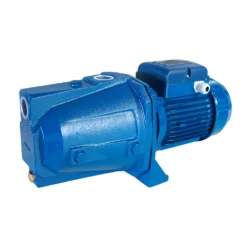
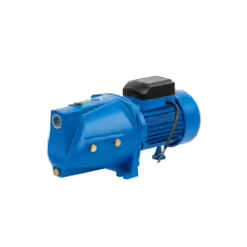
JET self-priming pump 380V 0.75kW / 1 hp three-phase
169,00€ HT -
JET self-priming pump 230V 0.75kW / 1 hp
169,00€ HT -
JET self-priming pump 230V 0.55kW / 0.8 hp
153,00€ HT -
JET self-priming pump 380V 1.65kW / 2.2 hp
359,00€ HT -
JET self-priming pump 220V 1.10kW / 1.5 hp
349,00€ HT
Lire le guide complet
What self-priming actually buys you
A conventional centrifugal pump needs its casing and suction line full before it will start. A self-priming pump clears the residual air itself — the difference between an installation that starts first time every spring and one you have to prime by hand.
A foot valve at the end of the suction line remains essential: without one, water drains back to the well at every stop and the pump has to repeat the whole cycle.
Characteristics
- Suction lift up to 8 m in good conditions
- Suitable for clean and lightly loaded water
- Reliable starting after long periods out of use
- Suits pillow tanks, wells, irrigation and transfer duties
Installation
- Site the pump dry and sheltered, as close to water level as practical
- Airtight suction line, rising gently towards the pump, with no high point
- Foot valve with strainer at the end of the suction line
- Union connectors either side to make removal straightforward
Frequently asked questions
Does it really prime by itself?
Yes, provided the casing is filled at first commissioning and the suction side is airtight. Self-priming clears residual air; it does not compensate for a permanent air leak.
Can it lift from more than 8 metres?
No. The limit is set by atmospheric pressure, not by motor power. If the water sits deeper, the answer is a submersible pump.